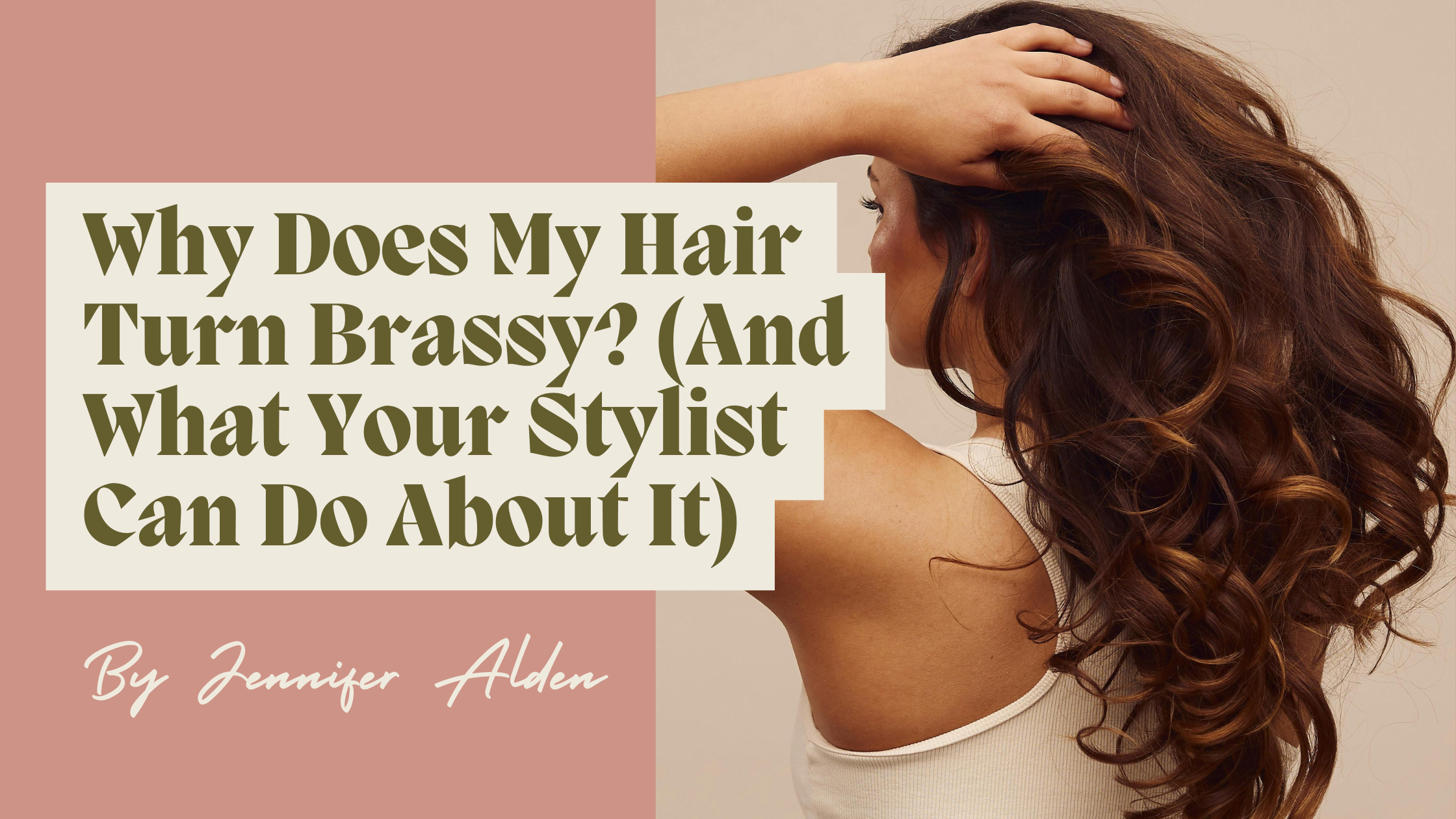
Why Does My Hair Turn Brassy? (And What Your Stylist Can Do About It)
You finally got that gorgeous, cool blonde or rich brunette you've been dreaming about. You leave the salon feeling like a million dollars — and then a few weeks later, you look in the mirror and notice it. That warmth creeping in. That orange. That brass.
What happened?!
First of all — you're not imagining it, and it's not your fault. Brassiness is one of the most common things my clients ask me about, and honestly, it's also one of the most misunderstood parts of hair color. So let's talk about it, because once you understand why it happens, everything starts to make a lot more sense.
It All Starts With Your Natural Pigment
Here's the thing about hair color that most people don't know: underneath every strand of hair, there are warm underlying pigments — reds, oranges, and yellows — that naturally exist in your hair. They're always there, even if you can't see them.
When we lighten your hair, we're lifting away your natural color. But those warm pigments? They're stubborn. They don't lift out evenly or all at once. Depending on your starting color, your hair history, and the lightening process, you can be left with varying levels of warmth underneath your beautiful color.
The lighter and more blonde you go, the more we have to lift — and the more opportunity there is for those underlying warm tones to show up if we're not addressing them properly.
So What Even Is Toning?
This is where toning comes in, and it's honestly one of my favorite parts of the color process.
Toning is the step that takes your hair from "lifted" to finished. Think of it like this: lightening is the canvas prep, and toning is the actual painting. A toner deposits color molecules onto your hair shaft to neutralize or adjust those unwanted warm tones and create the exact shade we're going for — whether that's a cool platinum, a beige blonde, a smoky brunette, or a warm honey.
Toners work on the principle of color theory — specifically, opposite colors on the color wheel cancel each other out. Orange and brass tones are neutralized by blue and violet pigments. That's why you'll often see toners (and toning shampoos) with a purple or blue base. It's not magic — it's just science!
Why Does Brassiness Come Back?
Here's the part that trips a lot of people up: toning is not permanent. It's a semi-permanent or demi-permanent process, which means it will fade over time — especially with washing, heat styling, and sun exposure.
A few things that can speed up brassiness:
Washing your hair too frequently — every wash lifts a little color
Hot showers — heat opens the hair cuticle and lets color escape faster
Hard water — mineral buildup can oxidize your color and bring out warmth
Sun exposure — UV rays break down color molecules over time
Using the wrong products — sulfates and harsh cleansers are tough on color-treated hair
This is exactly why I'm so passionate about the products I recommend to my clients. I work exclusively with clean, professional lines that are formulated to be gentle on color-treated hair — no harsh sulfates, no unnecessary chemicals that strip your color faster than it needs to fade. When you invest in your hair color, your at-home routine is what protects that investment between appointments.
What Can You Do Between Appointments?
Great news — there's a lot you can do at home to keep brassiness at bay:
Use a purple or blue shampoo once a week. These are toning shampoos designed specifically to neutralize warm tones. Don't overdo it though — using them too frequently can leave hair looking dull or even slightly purple. Once or twice a week is usually perfect.
Wash with cool or lukewarm water. I know, I know — hot showers feel amazing. But rinsing your hair with cooler water helps seal the cuticle and lock in your color longer.
Protect your hair from the sun. UV protection sprays for hair are a real thing and absolutely worth using, especially in summer.
Extend time between washes. Dry shampoo is your best friend. The less you wash, the longer your color stays vibrant.
Come in for a toning gloss. A gloss or toning treatment between your full color appointments is a quick, affordable way to refresh your color and knock out any brassiness that's crept in. It's one of my favorite services to recommend!
Every Head of Hair Is Different
One thing I always want my clients to know: brassiness doesn't look the same on everyone, and the solution isn't one-size-fits-all either. Someone starting with very dark, coarse hair is going to have a very different toning journey than someone who's naturally light with fine hair. That's why working with a colorist who really listens and understands your specific hair is so important.
My goal is always to create color that works with your hair's natural tendencies — not against them. That means using techniques and products that are kind to your hair's health while still giving you the color results you're dreaming of.
The Bottom Line
Brassiness is completely normal, incredibly common, and totally manageable. It's not a sign that something went wrong — it's just your hair's natural pigments doing their thing. With the right toning process in the salon, the right products at home, and a little knowledge about what's happening in your hair, you can keep that color looking fresh and beautiful a whole lot longer.
Have questions about your specific color situation? I'd love to hear from you. Reach out to book a consultation or a toning gloss appointment — let's get your hair back to exactly where you love it. 💛
xo Jen