

How Often Should You Really Be Getting a Haircut? Here's My Honest Answer
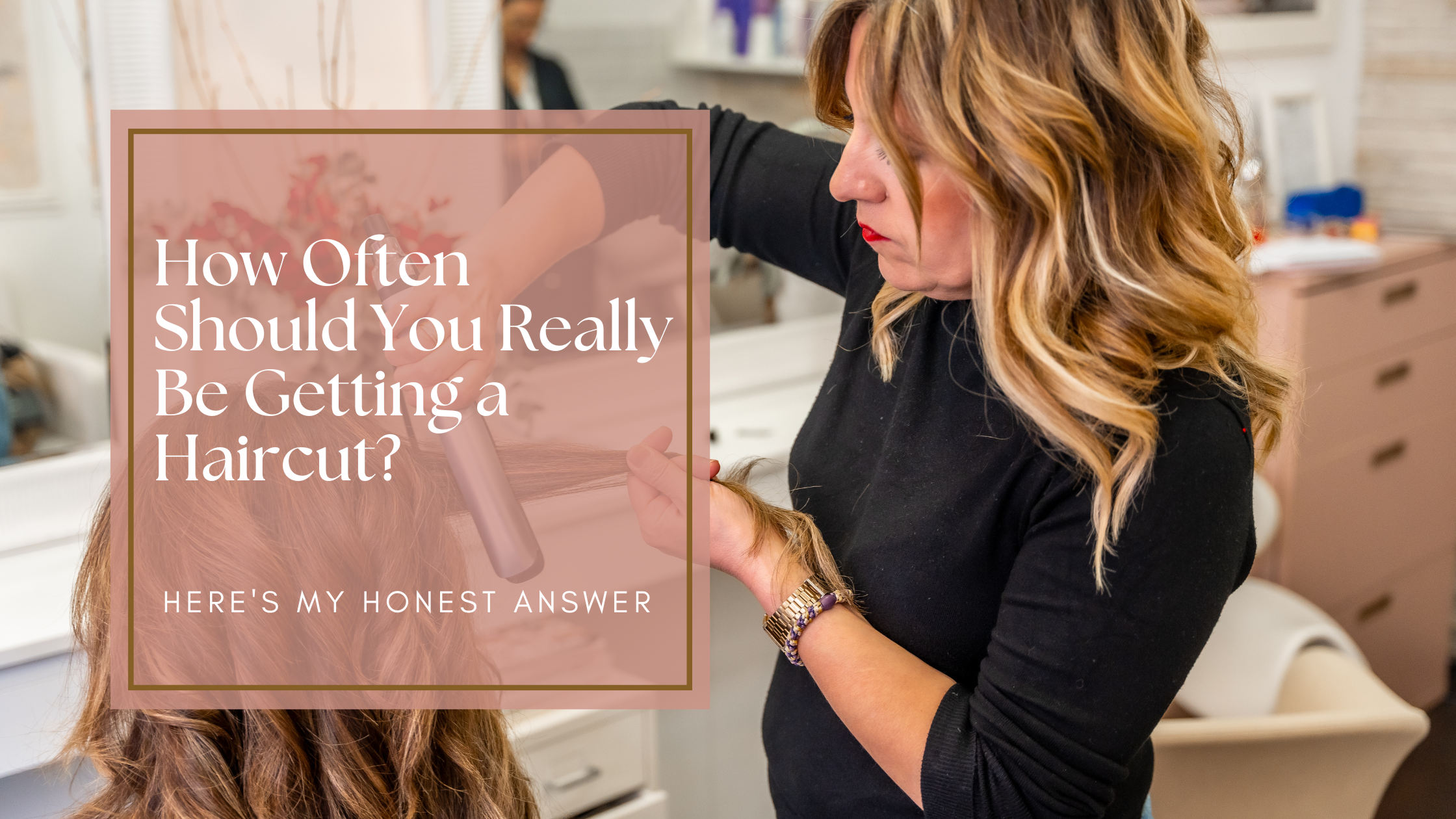
This is one of the questions I get asked most often — and honestly, it's one of my favorites because the answer is so much more nuanced than most people expect.
There's no universal rule. The right answer depends on three things: your hair goal, your length, and your heat styling habits. Once you know those three things, the timing becomes really clear.
Let me break it down exactly the way I would in the chair.
If Your Goal Is to Grow Your Hair Out
Growing your hair out is a commitment — and one of the biggest myths I hear is that you should skip trims entirely so you don't lose length. I completely understand the logic, but it actually works against you.
Here's why: when split ends are left untreated, they travel up the hair shaft. What starts as a tiny split at the tip becomes damage further up the strand over time. That means when you do eventually come in, we have to remove more than we would have if you'd kept up with regular trims. You actually lose more length by waiting too long.
So if growing is your goal, here's what I recommend:
No heat tools in your regular routine → come in every 4–6 months
Regular heat styling (blow dryer, flat iron, curling iron) → every 3–4 months
The heat piece matters because thermal styling accelerates damage and dryness at the ends. The more heat you use, the more frequently those ends need attention to stay healthy and strong.
If Your Goal Is to Maintain Your Length
Maintaining is about keeping your hair exactly where it is — same shape, same length, same vibe. This is actually where consistency really pays off. Regular trims keep your ends healthy, your shape fresh, and your hair looking intentional rather than grown out.
No heat tools in your regular routine → every 4–6 months
Regular heat styling → every 3–4 months
Same timing as growing, but with a slightly different intention. When you're maintaining, we're not necessarily taking length — we're cleaning up the ends, refreshing the shape, and making sure your hair continues to look and feel its best between visits.
If Your Hair Is Short — Pixie to Chin-Length Bob
Short hair is a completely different conversation. And if you have a pixie, a cropped cut, or anything from chin-length and above, you already know this: short hair grows fast and loses its shape quickly.
Unlike longer hair where a little growth blends in naturally, short cuts are very shape-dependent. A few weeks of growth can take a precision cut from polished to shaggy. That's not a bad thing — but it does mean more frequent visits to keep it looking the way you love it.
My recommendation for short hair: every 2–3 months, regardless of heat use.
Why Trims Actually Matter — Beyond Just the Ends
I want to take a moment on this because I think it's really important and often misunderstood.
Regular haircuts aren't just cosmetic. They are genuinely part of a healthy hair care routine — especially if you have any kind of hair goal, color, or damage you're managing.
Here's what regular trims actually do:
Remove split ends before they travel up the shaft and cause breakage
Keep the hair's weight distribution balanced, which affects how it falls and moves
Maintain the integrity of your cut so it continues to behave the way it was designed to
Give us a regular check-in on your hair's health — I notice things at the shampoo bowl that you might not see at home
Think of it like this: you wouldn't skip dental cleanings because you brush your teeth every day. Regular trims are the professional maintenance that supports everything you're doing at home. They protect your investment.
My Honest Take After 12 Years Behind the Chair
The clients whose hair I've watched transform the most beautifully over the years are the ones who stay consistent. Not the ones who come in every six weeks on the dot — just the ones who show up regularly, communicate their goals, and trust the process.
Hair health is cumulative. Every good decision you make — the right products, protective habits, regular trims — builds on the last one. And every appointment is a chance for us to assess where your hair is and adjust the plan accordingly.
You don't need to be on a rigid schedule. You just need to be intentional.
Not sure what schedule is right for your hair specifically? That's exactly what I'm here for. Book a consultation and we'll figure it out together. 🌿 xo jen
